

A few weeks ago, I found myself reading Project Geospatial’s thought-provoking article, Beyond the Gilded Exterior: Balancing Marketing and Momentum in the St. Louis Geospatial Ecosystem.
Like many people deeply invested in St. Louis, I read it with mixed emotions.
Not because I thought it was unfair.
Quite the opposite.
It asked a question that every innovation ecosystem eventually has to confront:
How do you transform incredible assets into measurable, sustainable momentum?
That’s a question I’ve wrestled with for much of my career.
I’ve spent years investing my time, energy, and relationships into helping strengthen the St. Louis geospatial ecosystem. Few places in the world possess the collection of strategic assets we have: the National Geospatial-Intelligence Agency, Scott Air Force Base, U.S. Transportation Command, exceptional universities, innovative companies, passionate nonprofits, and countless leaders who genuinely care about this region.
We’ve accomplished a great deal.
We’ve seen remarkable collaborations.
We’ve celebrated important wins.
But if I’m being honest, I also believe we’re still learning how to consistently align those individual strengths into something larger than ourselves, a truly integrated innovation ecosystem where government, academia, industry, investors, entrepreneurs, and workforce organizations move together with a common purpose.
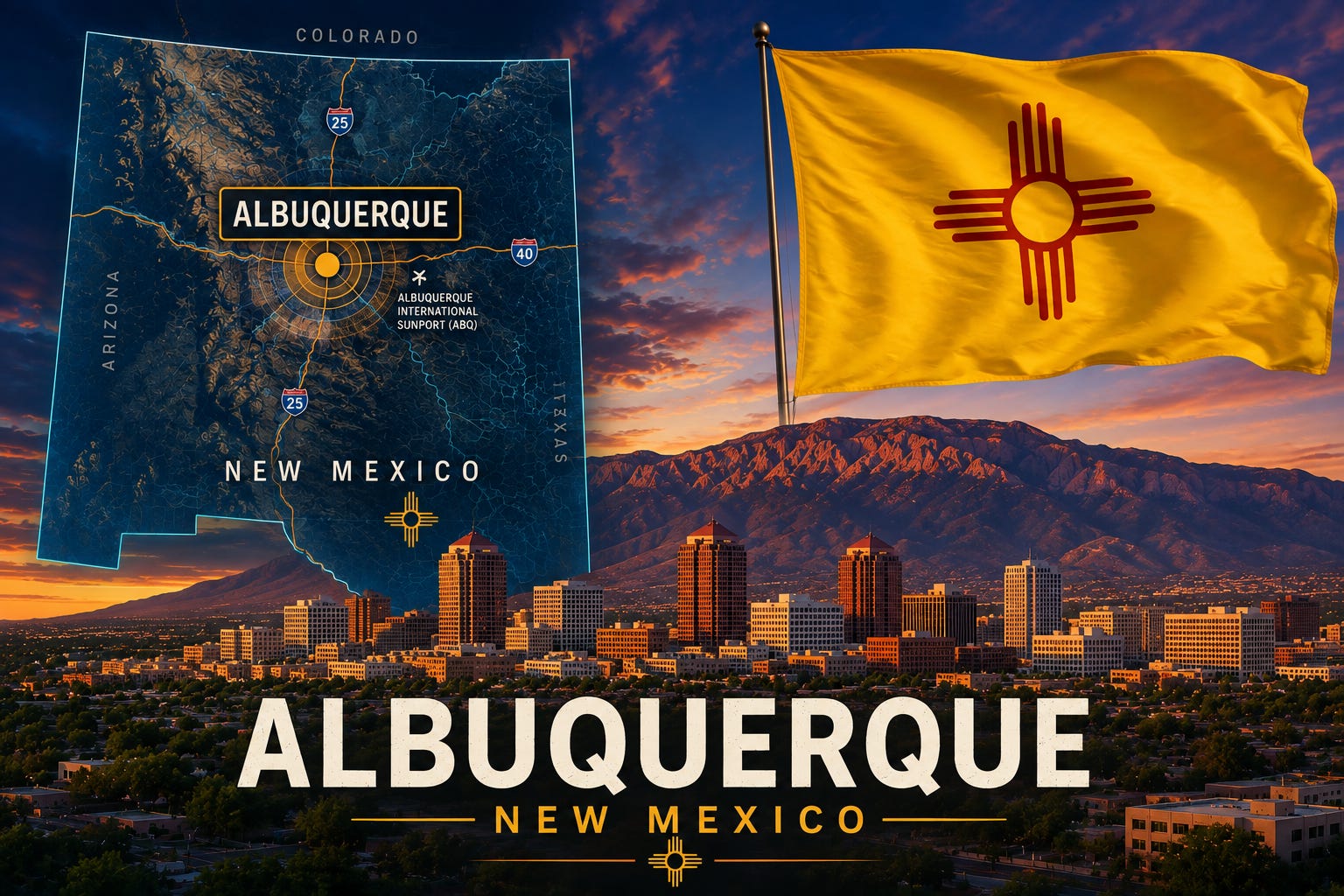
That realization made what I experienced in Albuquerque, New Mexico, all the more meaningful.
It Started With a Conversation
Like many of the best opportunities in life, this one began through relationships.
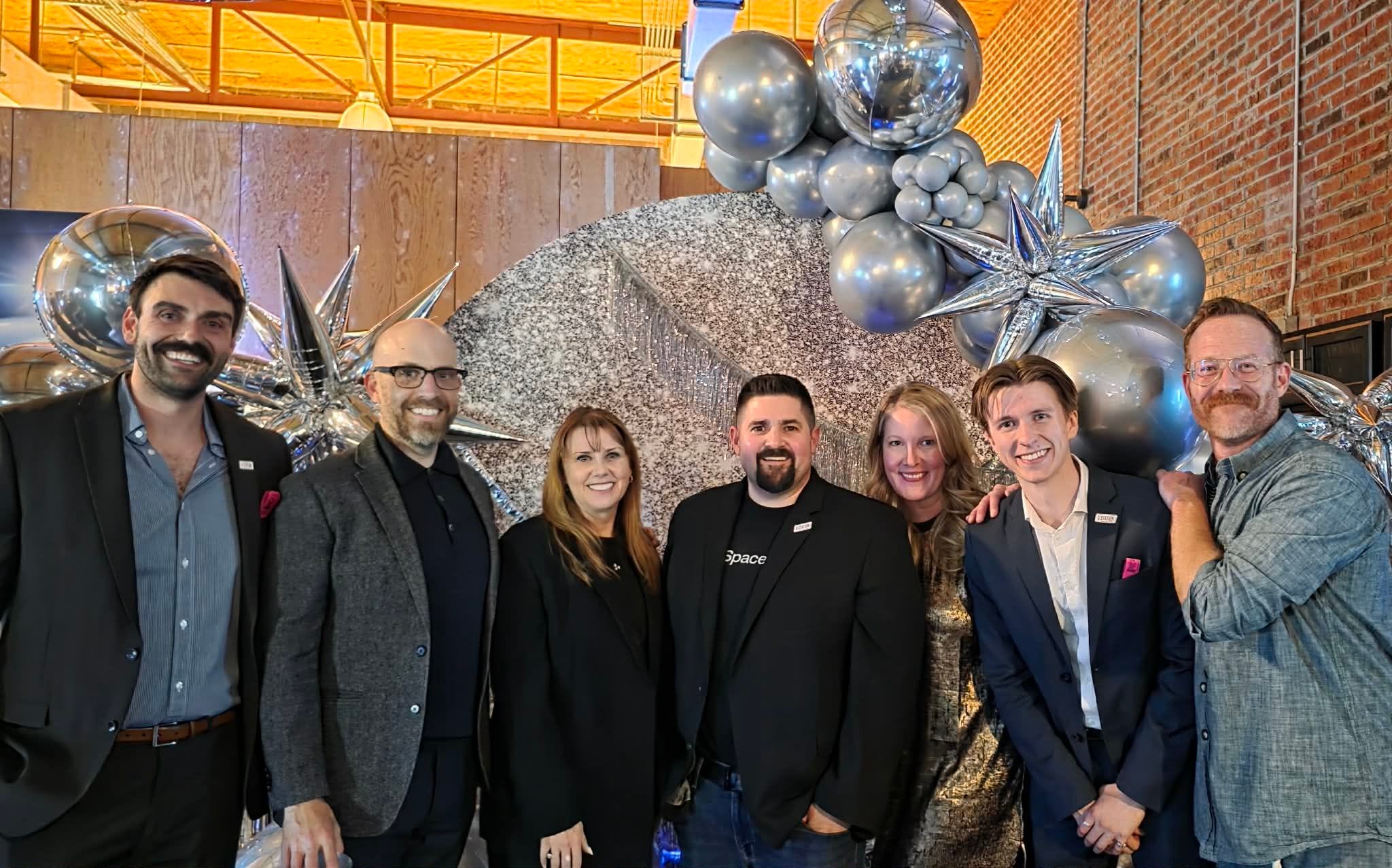
A longtime friend, colleague, and Marine Corps brother, Matt Harrison, introduced me to Randy Trask, President of the New Mexico Trade Alliance and CEO of Q Station, and Bryce Kennedy, Executive Director of the Space Valley Foundation.
At first glance, our worlds looked different.
Mine centered around geospatial intelligence.
Theirs revolved around space, aerospace, and defense technology, or as they say “A Hub for Aerospace, Directed Energy, and Technology Innovation”.
But it didn’t take long to realize we were asking many of the same questions.
How do we build workforce pipelines that actually meet future mission needs?
How do universities become true innovation partners instead of simply education providers?
How do we connect government, industry, academia, entrepreneurs, investors, and economic development organizations into a single ecosystem instead of allowing each to operate independently?
Most importantly...
How do we build something that lasts longer than any one organization or individual?
In May 2025, I invited Randy and Bryce to St. Louis during the GEOINT Symposium so they could experience firsthand what we’ve built around NGA and the broader geospatial community.
What began as a few conversations quickly became genuine friendships, mutual respect, and an ongoing exchange of ideas between two regions that, on paper, seem very different, but in reality share remarkably similar aspirations.
The rest, as they say, is history.
I Didn’t Come Home Talking About Technology
I’ve been fortunate throughout my career to work alongside extraordinary organizations and some of the brightest minds in government, industry, and academia.
At this stage in my career, it isn’t a shiny new building that impresses me.
It isn’t another innovation center.
It isn’t the latest technology demonstration.
What still impresses me is something much harder to build.
Trust.
Leadership.
Partnerships.
Humility.
Communities willing to put mission ahead of ego.
That’s what I found in Albuquerque.
Everywhere I went, I noticed something that felt different.
Conversations rarely ended with business cards.
They ended with introductions.
People weren’t asking, “How can my organization benefit?”
They were asking, “Who else should you meet?”
They weren’t talking about partnerships.
They were building them.
Economic developers weren’t competing with one another.
They were coordinating.
National laboratories weren’t isolated behind security fences.
They were intentionally creating pathways for entrepreneurs to commercialize breakthrough technologies with real national security impact.
The entire ecosystem felt less like a collection of independent organizations and more like a team united by a common mission. What impressed me most was that their vision wasn't limited by city limits or state borders. They are intentionally building relationships, partnerships, and innovation networks that stretch across the United States, and increasingly around the world
That distinction matters.
Innovation Is More Than Startups
One of the highlights of my visit was learning more about the Laboratory Embedded Entrepreneur Program (LEEP) at Los Alamos National Laboratory.
The concept is beautifully simple.
Take promising startup companies.
Embed them alongside some of the world’s best scientists and researchers.
Give them access to expertise, facilities, mentorship, and mission partners.
Then help accelerate technologies with both commercial and national security applications into the real world.
Innovation doesn’t stop with research.
It requires intentional pathways to commercialization.
It requires experienced leadership.
It requires trust between government, academia, investors, entrepreneurs, and industry.
LEEP is one example of what happens when those ingredients come together.
That same philosophy was evident at Q Station.
Calling it an incubator would dramatically undersell what it has become.
Q Station serves as connective tissue across the Air Force, Space Force, AFRL, national laboratories, universities, startups, investors, industry, and regional economic development organizations. Through its role as a Partner Intermediary, it helps bridge the often-complex gap between federal innovation and commercial opportunity. Even more impressive, its collaborative model is expanding beyond New Mexico into other states and international partnerships.
Workforce development was equally compelling.
CNM Ingenuity (a nonprofit enterprise arm created by Central New Mexico Community College in Albuquerque) isn’t simply preparing students (of all ages) for today’s jobs.
It’s preparing people for industries that are still taking shape.
Programs in software development, quantum technology, Internet of Things, makerspaces, and entrepreneurship demonstrate what happens when education is designed around where industry is going, not where it has been.
The Biggest Lesson Had Nothing To Do With Albuquerque
As impressive as these organizations are individually, they weren’t my biggest takeaway.
The biggest realization was this:
We’ve spent decades talking about geospatial, aerospace, artificial intelligence, autonomous systems, cybersecurity, and national security as though they are separate industries.
They’re not.
They’re rapidly becoming one ecosystem.
Satellites collect information.
Autonomous systems expand collection.
Artificial intelligence accelerates understanding.
Geospatial professionals transform data into intelligence.
The mission doesn’t recognize traditional organizational boundaries.
Neither should our workforce.
I’ve believed for years that you cannot have geospatial without space.
What Albuquerque reinforced for me is that the future belongs to communities that embrace that convergence rather than resist it.
The future workforce won’t think in silos.
Neither should we.
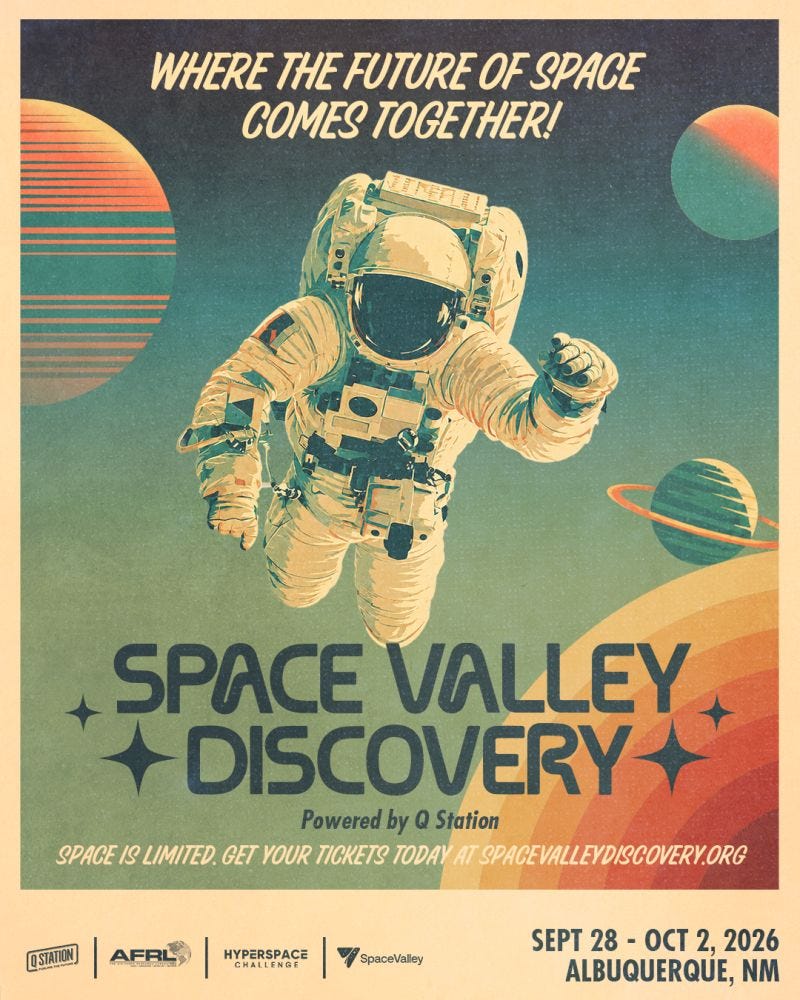
This Isn’t About Albuquerque Versus St. Louis
If that’s your takeaway from this article, you’ve missed the point.
This isn’t about one city being better than another.
It’s about recognizing complementary strengths.
St. Louis possesses the potential to be one of the worlds premier geospatial ecosystems.
Albuquerque has built an extraordinary ecosystem around aerospace, national laboratories, directed energy, space technologies, defense innovation, and commercialization.
These aren’t competing ecosystems.
They’re complementary ecosystems.
In fact, I believe they need one another.
One region brings decades of leadership in GEOINT, logistics, and transportation.
The other brings nationally recognized capabilities in space systems, defense technology, research commercialization, and laboratory innovation.
Together?
That’s a partnership capable of shaping the future defense workforce.
Leadership Matters More Than Population
On paper, Missouri has nearly three times the population of New Mexico.
That statistic is interesting.
It also misses the point.
Innovation isn’t a function of population.
It isn’t even a function of funding.
It’s a function of leadership.
Alignment.
Trust.
Shared purpose.
The communities that succeed are the ones that learn how to move together.
Albuquerque and Q Station reminded me of that, and in my opinion is a gold standard for excellence.
Looking Forward
I didn’t leave New Mexico thinking, “How can St. Louis become Albuquerque?”
I left asking a much better question.
What can we build together and how can we learn from each other?
The future of American innovation won’t belong to cities competing for headlines.
It will belong to regions that recognize their unique strengths, build authentic partnerships, and intentionally connect complementary ecosystems.
I believe St. Louis has tremendous strengths.
I believe Albuquerque does too.
The opportunity isn’t choosing between them.
The opportunity is connecting them.
If we can build stronger bridges between geospatial intelligence, space systems, autonomous technologies, research universities, national laboratories, workforce development organizations, and entrepreneurs, we’ll create something far more valuable than another regional success story.
We’ll help build the innovation ecosystem our nation needs.
And after spending time in Albuquerque, I can’t wait to see where that journey leads next!